beehammer: featherstar (Default)
It was inevitable, I suppose, and now I know what to do for next year, but they've bolted.  Most of it got turned into rabbit food, and I harvested it in such a way that I could experiment with whether or not the second-crop cut actually works (it seems to), but after a bit I went ahead and left the flowers as-is.  They certainly weren't hurting anything, after all, and I used an heirloom variety when I planted.  If it goes to seed, that'll hardly be the worst thing in the world.

So I have a planter that the passion flower vine has completely taken over, impolite thing that it is, studded with the dogged tropical sage which doesn't care that it has to grow sideways through this thicket and the tiny yellow flowers on four-foot stalks that the mustard greens have turned into.  One of the mustard flowers is now home to a little flower crab spider.

I noticed her because she was a staggeringly bright white against the yellow when she first moved in.  Almost a week later, she's successfully shifted her color to a pale yellow, and might even make it all the way to a matching color by the end of the week.  Not that it matters to the pollinators she's hoping to catch--her skin reflects UV light in a way that makes her flower more attractive to them no matter how she looks to people.  But it should help her hide from predators hoping to eat her.
beehammer: featherstar (Default)
I went a bit overboard planting blanket flower back in December.  It was cool and dry, and the plants weren't very big, and I had no real expectations of them bulking out as much as they did once things warmed back up.

Blanket flower is very pretty, and very showy, and I've wound up with a big fucking essentially contiguous stand of it in my front yard.  This basically means that every bee and bee-adjacent bug in a half-mile radius cannot get enough of it.  I was out watering at the correct time for bees this afternoon, and honey bees?  Check.  Solitary bees?  Check.  Solitary wasps?  Check.  Flies pretending to be bees?  Check.  It was just a buzzing mess of activity, and all the different sorts of bees had their own priorities.

The mustard greens have finally bolted, which means a sea of pretty little yellow flowers, which means tiny little wasps and butterflies visiting them.

Hrm

Apr. 15th, 2019 09:16 pm
beehammer: featherstar (Default)
So the gardening experiment continues apace.  Unfortunately, I've reached that stage with a few of the plants where I have no real idea what I'm going to do with them for the next few weeks.  Like I have about a dozen okra plants, all of which were started at the same time, but due to the vagaries of nature none of which are the same size or producing the same number of blossoms, etc.  Same deal with the asparagus beans, really--about a half-dozen are climbing all over everything and another dozen are still trying to figure out how trellises work.

Now, if you have three ripe tomatoes or one ripe strawberry or a teensy bit of parsley or one bunch of mustard greens, this is fine.  You just... eat the three tomatoes or the lone strawberry or the teensy bit of parsley or the single bunch of mustard greens and move on with your day.  Eventually the rest of the plants catch up and begin producing in earnest, and you get enough strawberries for dessert or enough tomatoes for a sauce, but in the meantime it's no big.  You just do your thing.

What in the name of god do you do with a single ripe okra pod?

(Aside from be disappointed, I mean.)

Like, am I going to use it to thicken the world's smallest batch of soup? Oil and season it and throw it on a baking sheet with a reasonable number of veggie tots?  Buy a half-pound of okra from the store and play "Guess which one grew here"?

Inquiring minds want to know.

It rained

Apr. 9th, 2019 07:32 pm
beehammer: featherstar (Default)
O frabjous day, it rained.  It really, really rained.  I only had to water a handful of things in containers or otherwise situated so that they didn't get quite as much as they needed from the rain, which left me time to spread some fertilizer and reclip all my baby beans that haven't gotten the hang of wrapping around stuff yet and plant a bunch of seeds and re-pot all my roselle seedlings.

If it hadn't started raining again while I was doing that, I could have knocked out planting the parsley I bought in case either I or any black swallowtail caterpillars want to eat it--it's going in a little patch between the okra and the swamp milkweed.
beehammer: featherstar (Default)
One of the side effects of spending the winter planting all the things is that inevitably, summer rolls around, also inevitably, it won't rain nearly as often as it needs to, and you'll have to water all the things.

It hasn't rained like at all this spring.  Maybe a couple days here and there, barely enough to fill up the two rain barrels with an A+ gutter situation.  Drip-line irrigation is, of course, an option, but it's fuck-ugly, plastic tends not to hold up more than a season or two with the sun going, and also requires you to have some goddamned idea of what you'll be doing with your plants instead of just wandering around going "I'm tired, guess this is where I'm planting this tree."

So I've been hand-watering everything, which is just. Ugh.  Not in general--you kind of have to be out there every other day or so to keep tabs on things anyway, you know?--but the simple fact that it's been every. goddamned. day.  Everything needs to be watered, every day, no exceptions.  It's mentally exhausting.  I have so many more interesting and rewarding plant-related things I could be doing with that time--there are things that need repotting, and seedlings that need transplanting, and new seeds I want to start--but that's all gonna have to wait until after I'm done fucking watering the things I already have.

So I've spent the past few days particularly resenting it, because the weather's gotten hotter, and more humid (but not in a way that stops things from drying out, somehow), and I've had jackshit in terms of free time, and the rain barrels have been empty for a week which means I'm using the hose, which I always feel guilty about. 

But at the same time, the plants are doing well.  Everything that I mail-ordered except for one tree is growing.  The okra are somehow flowering even though they're barely a foot tall, the peach tree has blossoms on it, and the tomatoes are finally ripening.  The passion flower vine has a bunch of fritillary caterpillars on it, there've been monarchs all over the place, and there's always at least three types of bee visible during prime pollinating hours.  Cleaning things up with the weedwhacker as they get tall enough to be annoying instead of having to bust out the lawnmower has meant that the native wildflowers are getting a chance to do their thing instead of never getting quite tall enough to produce many blossoms.

It's less the ugh of "why did I do this to myself" and more the ugh of "I really need the weather to throw me a bone right now." Just a couple days of enough rain that everything gets good and soaked, that I don't have to spend an hour watering everything, that I can fertilize without worrying about scorching the plants--that's literally all I'm asking, weather.  It's not too much, is it?  I feel like it shouldn't be.
beehammer: featherstar (Default)
So this is the planter.

raised bed with a mix of plants

I planted Florida heirloom broadleaf by scattering the seeds on the surface of the soil, watering vigorously, and hand-weeding any unwanted plants or weeds that cropped up.  The other plants are a mix of tropical sage, passionflower vine, violets, etc.--mostly native plants and selected to attract pollinators.  The planter's about four feet across and about 5-6 inches deep.  I used a whole packet of seed on this one patch of dirt, but it was an old packet so I really didn't expect much at all in terms of germination rate.

closer picture of the planter

There are still tiny little mustard seedlings doing their thing and getting ready to grow once the bigger plants are harvested, too.

the planter from a different angle

If your preferred method for harvest is to pull up the whole plant once it's fully mature, this isn't a great method--it's hard to pull out one plant without disturbing or damaging the ones close to it, at that proximity.  It probably also isn't a great bet for mustard types that get fairly sizeable before they're mature.  For Florida broadleaf, the plant seems to be pretty tolerant of the partial harvest method, where you trim off individual leaves as they get big enough to have that pepperiness and leave the rest of the plant alone, and most sources I've seen have recommended eating the leaves when they're 3-6 inches long, after which they get a bit tough and almost bitter. 

So far with a bed this size, I've gotten about a colander full of greens each time I've gone out to harvest.  They cook down aggressively, but it's enough for a side dish for one person or to spice up a main dish for everyone.  And the great thing about thinning greens, if your plants wind up too closely bunched to grow right, is that you just eat the greens you've thinned.

So it can't hurt to try, and seed packets are cheap enough to make it worth your while.  Even with the age of my seeds, this is about a month after sowing, after two rounds of harvesting.  In my case, I might not have enough cold weather left for the current seedlings to make it to eating-size without bolting, but they're an heirloom variety, so I should be able to save any seed the late bloomers produce for next winter.

One of the things I've found with raised bed gardening, and with spending a while gardening mostly for pollinators and wildlife, is that I now have a much healthier reservoir of insect predators hanging around waiting to spring into action if they spot an aphid or beetles.  Last time I tried food-gardening, the yard wasn't worth much of anything as habitat, and I had aphids and scale bugs and leafcutters and just about every other kind of gnarly insect you could wind up with crawling all up in my containers. 

I was also able to go hog-wild with coffee grounds earlier in the year, which help keep ants from colonizing the planters and upsetting the apple cart by guarding aphids against predation.  The ladybugs were out in force in this planter today cleaning off the passionflower vine, and the mild winter means that the paper wasps never quite went dormant, so stray caterpillars haven't been a problem either.  The feral lot next door even helps out by hosting hawks and owls that keep rabbits from being much of an issue.

There are definitely reasons you might want to go the neat, wide-spaced rows route when it comes to mustard greens--it certainly makes harvesting quicker and easier, especially if you're trying to feed a large number of people--but I'd say you don't really have to if you don't have high numbers of pests around waiting to wreck your whole crop.  Plus I've heard that mustard greens are hell on nematodes, so even if you don't get much yield for your seed, growing the mustard can help future crops you plant in that bed have a healthier time of it.

If you haven't already, it might be worth your while to check out David Goodman's Totally Crazy Easy Florida Gardening.  Most of his advice is more applicable to your section of Florida than mine, and I still found it to be a very helpful overview of possibilities and strategies.

Good luck, and happy growing! :D

beehammer: featherstar (Default)
So about... a year ago?  two years?  Let's call it two years.  I went on a little bit of a seed-packet bender and bought a lot of things I had absolutely no way to use with what I had at the time.  I also had absolutely no plans to put in anything that would let me use them.  Just utterly useless, aspirational seeds.  I was cleaning out my seed packets this year, after putting in all the planters, and I found one with mustard green seeds.

Now, my feelings on gardening to feed yourself are a little... let's be nice and call them gun-shy.  I started out with plants because I wanted to grow my own food.  Not a lot, just stuff that it was difficult to get in optimal shape at the store (tomatoes, strawberries) or very expensive (bell peppers).  It was a nightmare.  I made a lot of mistakes, and Florida's not a terribly forgiving state when it comes to vegetable-growing errors.  My tomatoes went gangbusters, and the ten strawberries I managed to get out of those plants were delicious, but the peppers were a disaster and it turns out that eggplant both has thorns and is really not my favorite thing in the world even farm-fresh and my zucchini all died. 

Yes, you read that correctly.  I failed to grow even a single zucchini.

So I dialed everything way back and focused on plants that are pretty much impossible to kill and have only recently ventured back into the realm of gardening to feed myself instead of gardening to feed bees and butterflies and birds.

Basically, unless what you have is an overabundance of time and a ready-made patch of land just waiting for you to park a plant on it, growing your own food is probably not going to wind up being that much cheaper than just buying it.  Mustard greens, in fact, cost about three bucks for a giant bag of ready-to-use greens.

But mustard greens, you see, are available from a normal store around here for all of two fucking weeks a year.  It's like Christmas, when they show up, and I eat the hell out of them while the stores have them, and then they go away again.  It's not the growing season, either--they show up a little late and disappear early, in terms of when the local growing season is.  So mustard greens are very much cheaper to buy in the store than to grow yourself, when you factor in labor and water and dirt and so forth, but it doesn't matter because they can't be had even for ready money.  And I love them. 

So when the store stopped getting their bags of mustard greens in, I took the packet of seeds, said, "Fuck it." and scattered them in one of the planters that had the fewest things really thriving, because why the fuck not?

That was a month ago.  I just cut my first batch of greens today, and I had them for dinner tonight, and they're absolutely delicious, and there's a boatload more where that came from.  So mischief fucking managed on that front.
beehammer: featherstar (Default)
So my a/c decided to conk out today.  Fortunately it wasn't very hot out; unfortunately it still hit 82 degrees inside the house, with the sort of cross-breeze issues that meant opening the windows was just making things more damp instead of cooler.  It was very much a work in the yard where the wind is blowing free kind of afternoon.

All the beanlets that sprouted so far have been tucked away along the fence in the ground, the other half of the rotten fence I pulled down has been broken up and binned, I pulled an ungodly amount of stickerburr weeds up as well as about forty feet of catbrier root.  It's been dry and hot enough, though, that the handful of potted plants I've collected since December really aren't having a good time unless they've in very big pots.  So it was time to get the two tomato plants and one blackberry plant I bought on impulse the last time I went to the native plant nursery into the ground.  And by "time," I mean that I had about ten minutes of daylight left and was damn well going to use it.

There was about... I want to say five minutes between me traipsing around the corner of the house with a big pointy shovel and and nitrile gloves and a grim determination, having the dim realization that this had kind of a murdery vibe to it, and scaring the absolute fucking shit out of my next-door neighbor when she came outside to throw something in her bin.  Because you know what you don't expect to find when you come outside your house as night is finally falling?  A human being on their knees scratching frantically at the dirt and rattling dead leaves around because the blackberry plant's entire rootball decided to just fucking unravel the second the pot came off, barely visible on the other side of your split-rail fence.
beehammer: featherstar (Default)
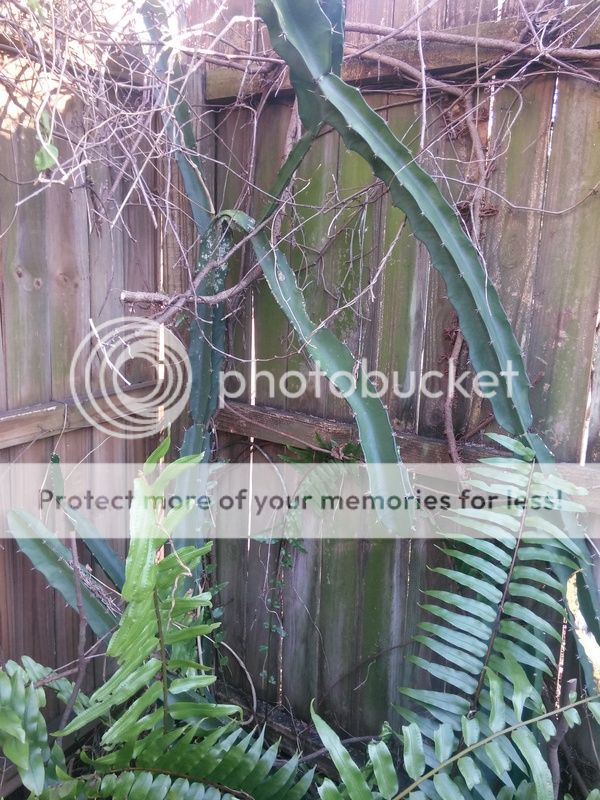
This was half-hiding behind the fence I tore down.
Unknown cactus

No idea what it is yet, but I've reached out to a few plant friends in the hopes of IDing it.  It's also got a few spawn that I hope to fob off on unsuspecting friends and neighbors once I have a name for it.

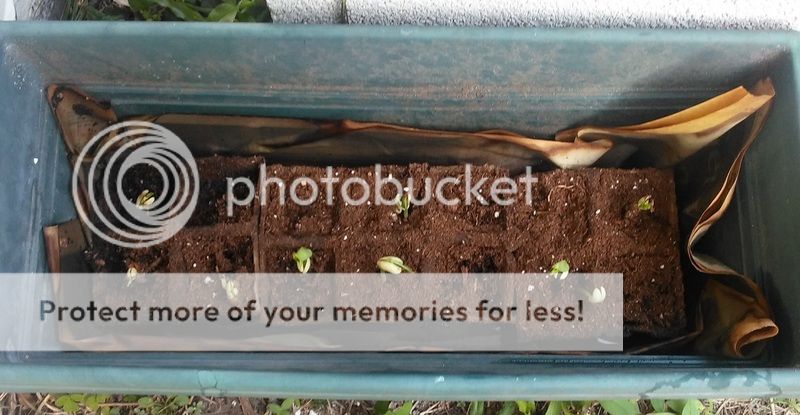
Behold, the tiny bean sprouts which shall some day become mighty plants bearing candlestick-sized beans!

Several bean sprouts in a planter.

They don't look like much at the moment, but I only started them on the 31st.  I'm also seriously doubting my decision to try planting okra, which should look nice but also the variety I got is, uh, seven feet tall according to the package.  Hopefully the neighbors will agree that it's a pretty plant.

The Fence

Feb. 4th, 2019 07:42 pm
beehammer: featherstar (Default)
My backyard neighbors are an apartment complex, so there's a pretty robust privacy fence along their rear property line.  They put up a new one about eight years back, and instead of tearing down the old shitty one, they just built their new one like four inches in from it, leaving the shitty one up for me, my next-door neighbor, and the feral lot on the other side of us.

I spent the weekend trying to suss out what of it is usable as a trellis for the pole beans I'll be planting soon, and I came to the conclusion that most of it wasn't that bad, except for the last section on the southern edge of the property.  I spent two hours this afternoon ripping that ten-foot long section out with my bare hands and a little crowbar, and not only does that patch of yard now look a million times better, but the rest of the fence looks so much less shitty without that section dragging it off kilter that it's not even funny.  I'm going to anchor it to the newer fence sometime this week to give it more stability, but it doesn't really need it anymore.

Of course, there now being only one fence instead of two fences means you can kind of see through the gap a little, so it was fun to spend two hours getting glimpses of movement on the other side of the fence, someone stopping and contemplating the shaking plants and the sounds of wood breaking and the occasional rustle of the bins getting moved around and then just deciding it wasn't their fucking business and they did not need this right now.  Because the thing about brittle, old planks breaking is that it's loud.  So there's morning glory vine disappearing over the fence and through cracks in the fence like mad, and then there's a noise like the fucking Kool-Aid Man is kicking his way through the fence, and then you decide that you just don't want to know and walk faster.

I still have more work to do before I can plant anything I need to keep an eye on, but I have at least a week before I have to worry about it, too.  The beans are sprouting, but they're at that like neonate stage where they haven't even gotten their leaves out of the ground yet--they're just germinating.

beehammer: featherstar (Default)
I've decided to try edible gardening again, because successfully not killing a small handful of essentially unkillable plants for a month has given me an outsized sense of my likelihood of success.

I'm starting with more essentially unkillable plants--a handful of sweet potato vines my grandfather ripped out of his yard are soaking in jars in the hopes that they'll root and give me a half-dozen or so slips.  There's a packet each of asparagus bean and collard seeds on their way.  I put a couple of Everglades tomato plants in one of the planters last week.  Ordering the seeds means I can get free shipping on a half-dozen blackberry plants to put in along one of my fences, where they'll look nice if nothing else.

One of the big things I missed last time I tried anything like this was having anything resembling a habitat in my yard.  The food plants I was experimenting with were the only real plants around, which meant there was nowhere for the predator-bugs who tend to take care of pests to live.  That's more or less taken care of now, with all the full-stocked planters scattered around the property.
beehammer: featherstar (Default)
It's a truth universally acknowledged that improving one part of a thing immediately throws all the other neglected pieces into sharper relief.  It's also a truth universally acknowledged that few things go right the first time around.

The orchid vine and the skyvine have been lashed to the tree they're meant to climb--it turns out it's Squirrel Season, and the chinaberry is a main rodent thoroughfare, so the plants aren't going to be able to swing this by themselves.  The main rain barrel's new downspout meant that, even though I got on the roof and cleaned the hell out of the gutters, a torrential downpour (half an inch in half an hour) a few days ago washed enough garbage into the barrel that the spigot is clogged.  I'll have to take the whole thing down to clean it out and flush it, which isn't what I wanted to do with next weekend, but it's a problem that happens.

I spent yesterday tearing apart and cleaning the front porch.  Everything is now swept, mopped, and tidied up.  I scrubbed down the front door and brushed away the cobwebs and scraped off the super-old muddauber nests.  It now has a few bits of new furniture that should help keep things sorted instead of just kind of piled up together, and I got enough things planted that there's now space for the old furniture to be spread out in a more useful way.  I got the last of the seeds I ordered a few months back planted--with any luck I'll see some sprouts in the next two or three weeks.

The baby longan trees have been moved to bigger pots, the feral mango tree that's never done anything but look shitty has been taken down to a stump, and I have a new compost bin picked out.  I've picked out where I want to put the last few plants going in the ground before the weather warms up, so I'll be prepping those this week.  I might remulch around one of the old planters if I get really ambitious, because weeds suck and know it's practically impossible to get the weedeater close enough to that planter to take them out.

I'm feeling pretty good about getting things as far along as they are, and everything definitely looks a lot less of a higgledy-piggledy mess scattered around the yard.  If I can just maintain a bit of the momentum going forward, I should be able to get it to the point where it's not difficult to keep up with over the summer when the weather's less cooperative.
beehammer: featherstar (Default)
Close-up of a musical note clerodendrum in flower

Not a super-great pic of the flowers, but they're such a bright bright white that it's difficult to get a good one.  Definitely a musical note clerodendrum--they take the name from the flower form you can see before they've opened.  The 'witches tongue' name comes from the fully-opened phase, with those honking purple tendrils hanging out all over the place.  The tendrils all have a little dab of bright yellow pollen on the tips.

Done!

Jan. 1st, 2019 07:58 pm
beehammer: featherstar (Default)
Well, not quite, but almost.  I have a couple of things to repot, and a lot of things to keep an eye on, but otherwise I am done with putting things in the ground.

Brick planter with several vines and a fern.

Behold, the doom planter.  Two cubic feet of peat moss, fifty pounds of composted cow manure, and four cubic feet of garden soil piled up in a brick circle made out of stuff I found pulling the previous one apart.

The thing on the left is a blue skyvine.  The thing on the right is an orchid vine.  They should both be happy with the set-up, and I've got my fingers crossed for the Cretan brake fern in the middle.  The chinaberry in the center's a bit sparse right now, but it tends to throw a pretty decent amount of shade in the summer, and the fern Does Not Like living on the porch from about June through August.  I have a big roll of garden twine I can use to get the vines started on their journey up the tree if they don't take on their own, but the bark is pretty rough and toothy, so I'm hoping they find their own way without issue.

I kind of wish I'd taken before and after photos--I try to take basically birthday pictures of the planters when I'm done with them, because you don't notice plants growing when you see them every day.  But the thing really didn't look that bad on the surface, so the before picture would be a damn lie.

I got a baby jadevine in the autumn, and it went from not doing anything to suddenly making super good friends with the plant next to it, so it's now in a much bigger pot with its own trellis.  The tropical lavender it was hugging too hard also got a bigger pot, but I fucked that one up so we'll see how it goes.  I'm really hoping I didn't shock it, but time will tell.  I think I have homes for all the orphaned oyster plants if they ultimately survive the potting process, so now it's just a matter of continuing to water them until they figure themselves out again.
beehammer: featherstar (Default)
The last planter is going to kill me, I think.  This is the hill on which hope dies.

I finally got it completely de-planted and de-trashed yesterday, and this morning I discovered that it had been just randomly built on top of an existing tree ring made out of concrete quarter-circles that they half-excavated, gave up on, and then just kind of... left.  These types of tree rings actually have an appropriate size that they're meant to be used for--the edge angles are unforgiving, and they don't form a circle if you use too many or too few.  So the pre-existing planter's gaps had just been filled in with random bricks and masonry, and I really don't know what they were thinking.

Everything had to come out, though.  I tore it all down, tried to level the dirt a bit, and started over.  Where I landed meant doing something about this oak sapling stump that's been trying to resurrect itself for ten years like some sort of weird necromantic dryad.  Digging it out actually didn't take that long?  And was immensely satisfying.  With nothing else in the way I could just dig, lever, dig, lever, etc. until all the smaller roots had been severed and the bigger roots had been pried up, and viola, no more oak tree!  The new shovel I bought when I started putting in the pitchapple and cocoplum and silver buttonwood is probably the most effective $35 I've spent in the past year.

The reassembled tree ring is significantly smaller than the pre-existing planter was, but I managed to budge it around so it's more or less in line with the planters I put in last week.  I had another set of the concrete tree ring quarters after breaking down a grapefruit tree that was dying when I moved in and finally gave up the ghost a year or so later, plus all the random brickwork from the old planter, and I've managed a smaller-but-deeper structure that can still work for what I wanted.  I'd really prefer not half-assing it now, but I'm at a level of done that doesn't support more random trips to Home Depot, and it's good enough for now.  I don't know if it will work for anything else, but hope springs eternal.

But I'm still recovering from the cold I came down with a few days after Christmas, and while my strength is more or less back, my stamina is still in the toilet, which means I want to hop in a time machine and go yell at whoever half-assed this in the first place.  Ugh.

At least the musical note clerodendrums are blooming!  They're definitely as advertised, and also A+ would purchase again little plants!
beehammer: featherstar (Default)
So, the final planter is a pre-existing planter.  It came with the house, and I had no real objection to the ring of oyster plants around the deeply-objectionable but difficult-and-expensive-to-remove chinaberry tree, so everything pretty much stayed as it was.  I've kept it weeded, but beyond that I haven't really interacted with it.  The oyster plants haven't exactly flourished under this neglect, but they've lived and produced pups and in a couple of cases even, I think, reseeded.

Unfortunately for them, I've decided to use the chinaberry tree essentially as a giant trellis for a skyvine and an orchid vine.  For that to happen, the oyster plants need to rehomed.  I somehow just assumed this would be like, digging up plants and putting them in pots and off we'd go. 

What it is like is sometimes digging up plants and putting them in pots and off we go and sometimes pulling up three horizontal feet of base with three plants sprouting from it that will fit in no pot known to man.  I have no idea what to do with these conglomerates, so I picked a patch of dirt along my backyard neighbors' shitty wooden fence and dug a hole.  It's not far from where they were, soil and sun-wise, so I'm hoping they're not much the worse for wear after they've had time to recover from the transplant.

Also unfortunately, as I'm pulling out plants I'm discovering more and more just random fucking garbage the previous owners threw in there and assumed the plants would cover their sins.  Pieces of broken clay pots, concrete chips from where somebody made a batch or broke something up and didn't feel like hauling it all to the dumpster, broken bricks.  Upon closer inspection, a lot of the stones around the bottom layer of the planter don't really fit, and that's why the top layer's always been so precarious.  They just assembled it out of whatever they had.  The soil inside it looks completely unamended, which I expected that it wouldn't be great, so I was prepared for that, but they just blocked in a patch of yard and planted some stuff and called it a day, I guess.

So I assumed this would be a two-day project at worst, with day one being plant removal and day two being replanting, but that was all I worked on today and I'm not even halfway done with removal and clean up.  I might wind up needing to tear the whole thing apart and build it back up from scratch to get acceptable results, which is just... I have time and materials for it, mostly, but this was not how I intended to spend the last days of my vacation.

In better news, everything in the other planters seems to be taking okay--I'm not seeing any obvious signs of transplant shock or wilting--and the Christmas senna weathered yesterday's wind without flopping on any of its neighbors.
beehammer: featherstar (Default)
I now have (almost) everything I need to make the yard fully operational.  Most importantly, I am no longer beholden to the delivery guy's dodgy-ass schedule.

I also got extremely excited because the coralbean I planted about a year ago finally had flowers.  Then I was like, "Wow, I had no idea coralbean had such... suspiciously sage-like flowers?  I thought they were more like a honeysuckle shape?"

The coralbean is not finally flowering.  The coralbean has a bit of red sage cropping up under it, some of which has punched through the canopy and that is now flowering. *jazz-hands*

One of the neighboring planters I kept a bunch of container-bound, older sage plants in is now full of reseeded babies, which will hopefully survive any further cold snaps.  Since this is precisely why I kept the containers in that planter, mission accomplished.

So far tropical sage has demonstrated itself as a pretty reliable plant for my yard--it reseeds readily, keeps blooming even though I don't deadhead it, and the pollinators love it.  The red, pink, and white varieties have been going pretty well, and I'm hoping the blue sage I picked up a few months ago now turns out to be a solid choice, too.  I want to pick up some more mistflower, though--it's pretty, and the one that came free with my cocoplum has turned out to really be the bees' jam.

Now I just need to figure out how I'm going to get the fourth water barrel in without completely wrecking the croton that came with the house.  It's not the greatest plant in the world, but it's put up with a lot of neglect and kept on ticking, so I feel like it deserves at least an attempt at preservation.
beehammer: featherstar (Default)
When I started gardening, I had these ambitions that I was going to, I don't fucking know, grow my own food or something.  Which is an admirable goal, yes, but my yard is composed of sand and bullshit.  Apart from almost drowning myself in cherry tomatoes, annoying everyone I knew with free jalapenos, and spending a lot of time fighting with aphids and the ants who turned them into a problem (yes, I know: coffee grounds), I didn't accomplish much.

It turns out that flower gardening with an eye on helping out bees and butterflies is a lower-stress proposition, so that's mostly what I shifted into.  The thing that you have to understand about bees, though, is that honeybees have a specific register they buzz in when they're pissed off about something.  What do honeybees get pissed about?  Lots of things, it turns out. 

They landed on you, and you went inside.  They wanted to hang out on a bag all day because it has a picture of a flower on it, and you need to throw the bag away before it gets blown all over your neighbor's yard.  They found a flower they liked, and then another bee came and tried to fit in the flower with them.  Just, you know, bee problems.

But a lot of the angry buzzing seemed to come for no real reason at all.  Just walk past a plant, hear angry buzzing, be vaguely miffed because the bee in question wouldn't have a flower to get territorial over if you hadn't planted it in the first place.

Metallic green Augochloropsis bee covered in pollen on a yellow flower.

Turns out these little jerks just fly around making the same buzz as an angry honeybee.  They're not mad about anything, that's just how they sound.  So, mystery solved.  My flowers haven't been visited by particularly irritable honeybees, they're being made use of by native sweat bees with resting bitch buzz.
beehammer: featherstar (Default)
Half-complete planter with a steel rod trellis in the shape of an egret.

This one is now the proud home of the egret trellis I made in a welding class a few months back, which will (hopefully) have passionflower vine crawling all over it once summer rolls around.  Joining the passionflower are pink tropical sage, wild coffee, coral porterweed, blue sage, and the rest of the blackberry lily seedlings.

Also, because I just assumed the trellis's legs would punch through the newspaper providing a weed barrier for the planter, I would up digging giant holes back out of it and cutting through everything with a box cutter, which was not fun.  I think the final effect should be worth it, though, especially once the rest of the plants bush out and start growing again now that they're released from the confines of their pots.
beehammer: featherstar (Default)
I ordered a literal ton of garden soil, composted manure, mulch, etc. from Lowe's to execute my Grand Garden Vision during the extended break from work between holidays and the bout of cool weather that makes working outside bearable.  Most of it got delivered today, so I spent six hours fighting with the yard. 

We've had massive dumps of rain and attendant windstorms in the past week, and so far my Christmas senna has proved impervious to any attempts at staking and keeps falling over onto my rollinia sapling.  Fortunately, it's in a cinderblock planter, so the current brilliant plan is to see how it does with loops of jute twine anchoring it to the cinderblocks.  I'd prefer not to take it out.  It's invasive, but it's easy to control by clipping the seedpods before they ripen.  It's also very pretty and has proven productive as a butterfly plant in the past season, though I don't think any of the caterpillars ultimately survived contact with the local paperwasps. 

But the fruit trees come first, and it'll damage the lychee sapling if it goes in the other direction, which isn't an option--that one's finally showing a lot of new growth, and I'm optimistic about it fruiting within the next five years if it stays happy.  The rollinia had a long scrape from being flopped on, which I treated with neosporin and crossed fingers, and I staked it upright until it stops looking so squished.  Supposedly I could see fruit as early as next year from that one, though it would be in the plant's best interests to nip anything rather than letting the plant waste its energy trying to fruit.

One of the new planters is going in where a patch of Jamaican porterweed got consumed by a sprawling vine, which meant digging the whole thing up and ripping everything out by the roots so it doesn't invade the new planter.  A half-dozen baby porterweeds were in the way, so they've been transplanted to pots.  I'm hoping they survive, since they reseed readily, butterflies and bees absolutely love them, and my mother's been asking for some to try out in her yard for a while.  They were fairly deeply embedded in the sod, though, with roots wrapped around grass rhizomes, so we'll see if they were damaged during the extraction process.

The endgoal of the multiple new planters I'm adding is to get everything I reasonably can out of pots and into the ground, since it's easier to keep everything healthy and functioning that way and should ultimately take less water once everything is established.  And if it doesn't, I suppose that's what the two new 50-gallon rain barrels are for.  It turns out the clerodendrum is finally flowering, which I hope I didn't disrupt by transporting it.  If the weather holds tomorrow, I can retrieve the trellis I made for the second planter and finally get the passionflower vines a coworker donated to the cause in the ground and trained to it.

Profile

beehammer: featherstar (Default)
beehammer

August 2019

S M T W T F S
    123
456789 10
11121314151617
18192021222324
25262728293031

Syndicate

RSS Atom

Most Popular Tags

Style Credit

Expand Cut Tags

No cut tags
Page generated May. 10th, 2026 07:54 am
Powered by Dreamwidth Studios